Independent Judgment for Complex Valuation
Fair Value (Private Enterprises) — Data Centers (GAAP)
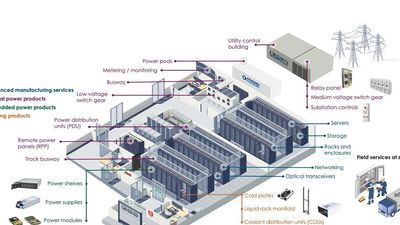
GAAP-Consistent Fair Value for Private Data Center Enterprises
Applied After Capital Commitment — Grounded in Survivability, Assets, and Obsolescence
Alpha Consulting US provides GAAP-consistent fair value (FV) analysis for private data center enterprises when capital has already been committed and stakeholders require a defensible measurement of enterprise value, asset value, or capital-structure allocation.
Fair value in our practice is not a starting point.
It is applied downstream, after enterprise viability has been established.
You can think of FV in our practice as:
“GAAP-consistent fair-value analysis for private enterprises where capital, viability, or structure decisions matter—performed without audit-driven urgency.”
Why Fair Value Still Matters for Private Data Center Companies
Private data center enterprises are often not SEC registrants and may not undergo annual audits. However, when financial statements, lender materials, investor reporting, or board documentation are prepared under U.S. GAAP, fair value concepts frequently become unavoidable.
In private data centers, FV is required not for compliance optics, but because:
- enterprise value may be site-dependent, not platform-survivable
- tangible and technical infrastructure dominate downside recovery
- capital structures are layered, negotiated, and non-standard
- power, timing, and ramp risk materially affect recoverability
- stakeholders require defensible economics under adverse paths
Common Fair Value Triggers in Private Data Centers
Business Combinations & Rollups (GAAP / ASC 805 Concepts)
FV is often required when a private sponsor or platform acquires:
- an operating data center or campus
- a site with in-place customer contracts
- a carved-out operating enterprise
- a Class 2 site-dependent data center business
Typical issues include:
- fair value of tangible infrastructure and site-specific improvements
- identification and boundary testing of intangible assets
- separation of enterprise value from site control and survivability
- reconciliation of goodwill assumptions to downside economics
Capital Structure Complexity & Investor Entry
Private data center capital stacks frequently include:
- preferred equity with priority returns or participation
- convertibles, warrants, or hybrid instruments
- JV waterfalls, minority interests, and control features
- recapitalizations or sponsor re-entries
Fair value analysis is required to:
- allocate value across classes and instruments
- evaluate downside allocation and capital survivability
- support board-level governance and fairness considerations
Impairment Indicators & Recoverability (GAAP / ASC 360 Concepts)
Impairment issues arise privately long before they appear publicly.
Common triggers include:
- power delivery delays, curtailment, or cost escalation
- slower-than-expected ramp to stabilization
- tenant concentration, churn, or repricing pressure
- density, cooling, or design obsolescence
- extended development timelines trapping capital
FV analysis supports:
- recoverability assessment
- probability-weighted downside outcomes
- enterprise-versus-asset survivability distinctions
Financing, Refinancing & Lender Reporting
FV is frequently required during:
- debt issuance or restructuring
- covenant renegotiation
- capital-stack repricing
- internal lender or credit-committee reviews
These engagements are decision-driven, not audit-paced.
The Role of the Asset-Based Approach in Data Center Fair Value
In private data center enterprises, the Asset-Based Approach plays a critical role in testing enterprise survivability and downside recovery.
Drawing on advanced asset-approach principles, we evaluate tangible and technical infrastructure—including electrical systems, cooling, mechanical design, and site-specific improvements—through the lens of:
- technical obsolescence (design limits, density constraints, cooling adequacy)
- functional obsolescence (layout, scalability, redundancy mismatches)
- economic obsolescence (power availability, pricing pressure, policy effects)
This analysis is essential in business combinations, recapitalizations, and impairment scenarios where enterprise value may not survive adverse paths and must be reconciled against what remains economically recoverable at the asset level.
Asset-based analysis in our practice is not a default method.
It is a discipline applied when downside risk, obsolescence, or site dependency materially affect value conclusions.
How Our Fair Value Work Is Different
Most FV work in the market is organized around quarter-end audit cycles and assumes continuity.
Our private-enterprise FV work is organized around economic reality and judgment quality.
Key distinctions:
- Enterprise viability first — FV is applied only after existence is established
- Asset survivability discipline — tangible infrastructure anchors downside value
- Site vs platform clarity — critical for Class 2 enterprises
- Power and timing as primary drivers — not residual assumptions
- Scenario-weighted economics — not single-point estimates
- Board- and lender-ready documentation — clear, traceable, defensible
Alignment With Our Data Center Classification Framework
Class 2 — Site-Dependent Enterprises (Non-Platform)
- enterprise value collapses if site control or power fails
- FV must explicitly test survivability under power, timing, and recapitalization risk
- tangible and technical assets dominate downside recovery
Class 3 — Platform & Strategic Infrastructure
- enterprise value survives individual site impairment
- FV focuses on capital allocation, scalability, and long-horizon deployment economics
- assets are inputs—not determinants—of value
Engineering tiers and market tiers inform risk, not valuation regime.
What We Deliver (Tailored to the Trigger)
Depending on the accounting and decision context, deliverables may include:
- GAAP-consistent fair value analysis and supporting memorandum
- tangible asset and infrastructure valuation with obsolescence analysis
- intangible asset identification and valuation (when applicable)
- capital-structure value allocation frameworks
- impairment indicator and recoverability support
- sensitivities focused on power timing, ramp risk, utilization, and pricing
Scope is intentionally bounded to preserve judgment quality.
Who This Is For
- private data center developers and operators
- infrastructure and digital-energy sponsors
- boards and investment committees
- private-credit and lender stakeholders
- institutional and cross-border investors (when applicable)
When We Engage
We engage when:
- capital has been committed or restructured,
- GAAP-based measurement is required for governance or reporting,
- economics are non-standard and judgment matters,
- audit-factory pacing is neither required nor desired.
Begin the Conversation
If you need GAAP-consistent fair value for a private data center enterprise where capital, asset survivability, or structural decisions matter, we welcome a confidential discussion.
Alpha Consulting US
Enterprise Viability • Capital-Stage Valuation • Infrastructure Economics
Principal: David Hahn