Overview
Industrial and manufacturing facilities are process-driven infrastructure assets, not generic commercial real estate. Their economics are defined by production systems, specialized utilities, equipment integration, and supporting infrastructure, rather than by office or warehouse layouts.
Alpha Consulting US provides Engineering-Appraisal-Based Cost Segregation for industrial and manufacturing facilities—focused on proper abstraction of non-depreciable land, reconciliation of total project basis, and defensible classification of qualifying tangible assets, including Qualified Production Property (QPP) where applicable.
Why Industrial & Manufacturing Facilities Require a Different Approach
Traditional cost segregation methodologies were developed around office, retail, and warehouse properties. Industrial facilities operate under a fundamentally different logic:
- Production processes drive layout and design
- Equipment integration dictates building configuration
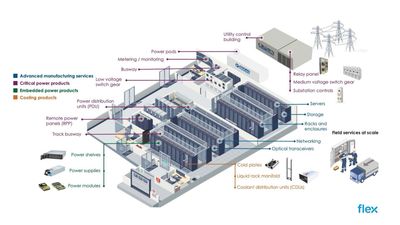
- Utilities, power, and process systems dominate capital investment
- Structural components are often secondary to functional systems
As a result, depreciation outcomes depend on function and process, not form.
An Engineering-Appraisal-Based framework is required to properly reflect this reality.
Process-Driven Capital Structure
Infrastructure Exists to Serve Production
In industrial and manufacturing facilities:
- Electrical systems are designed around equipment loads, not lighting or occupancy
- Mechanical systems support production requirements, not comfort alone
- Foundations, slabs, and supports are engineered for specific equipment
- Layouts are optimized for workflow, throughput, and safety
These characteristics materially affect asset life, classification, and depreciation treatment.
Qualified Production Property (QPP) Considerations
Many industrial and manufacturing facilities contain a high concentration of Qualified Production Property, including:
- Process-specific electrical distribution
- Dedicated mechanical and utility systems
- Equipment support structures and foundations
- Production-adjacent improvements
Proper identification of QPP requires:
- Understanding how assets function within the production process
- Separating structural building elements from process-driven infrastructure
- Reconciling all allocations to total project basis using appraisal methodology
What We Typically Analyze in Industrial & Manufacturing Cost Segregation
Actual scope depends on facility design, industry, and documentation, but commonly includes:
Electrical & Utility Systems
- Production-driven electrical distribution
- Dedicated substations and transformers
- Compressed air, gas, steam, and process utilities
Process & Mechanical Infrastructure
- Process piping and conveyance systems
- Equipment-adjacent mechanical systems
- Environmental and exhaust systems tied to production
Structural & Equipment Support
- Specialized foundations and slabs
- Equipment support frames and platforms
- Mezzanines and production-related structural elements
Site & Support Infrastructure
- Site improvements supporting industrial operations
- Internal circulation and logistics infrastructure
- Utility corridors and service yards
All allocations are reconciled to total project basis, with engineering data supporting appraisal-based classification.
Land and Site Considerations
Industrial and manufacturing facilities are often developed on large or specialized sites, selected for logistics, utilities, zoning, or workforce considerations.
From a cost segregation perspective:
- Land remains non-depreciable
- Site improvements must be carefully separated
- Improper land abstraction can materially distort depreciation outcomes
This makes appraisal discipline essential in industrial cost segregation engagements.
Methodology: Engineering-Appraisal-Based and IRS-Defensible
Our industrial and manufacturing cost segregation studies emphasize:
- Proper abstraction of non-depreciable land
- Reconciliation to total capitalized project cost
- Function-driven asset classification tied to production use
- Conservative interpretation aligned with IRS scrutiny
- Clear documentation suitable for audit and institutional review
Acceleration is pursued only when supported by economic function and documentation.
When Industrial & Manufacturing Cost Segregation Is Most Valuable
- Upon placement in service
- At acquisition
- After expansion, retooling, or process change
- In connection with valuation or financing events
- For facilities with high equipment and utility intensity
Bottom Line
Industrial and manufacturing cost segregation is not a template exercise.
It requires:
- Process understanding
- Infrastructure literacy
- Appraisal discipline
- Conservative professional judgment
An Engineering-Appraisal-Based Cost Segregation study ensures that qualifying industrial infrastructure and production-related assets are analyzed and documented in a manner that is defensible, transparent, and aligned with how these facilities actually operate.
Call to Action
If your facility is production-intensive, utility-heavy, or equipment-driven, you may have material depreciation classification opportunity—but only if the study is performed with appraisal discipline and process-level understanding.